
Local Attic Insulation Services
Attic insulation is one of the most important insulation systems in many North Texas homes. Because attic spaces can become extremely hot during Texas summers, poor attic insulation can make a home harder to cool, less comfortable, and more expensive to operate.
If your upstairs rooms are hot, your energy bills are high, your attic insulation is thin or uneven, or your home struggles to stay comfortable, it may be time to evaluate your attic insulation. This is often one of the easiest and cheapest options.
DFW Insulation Contractors helps homeowners compare attic insulation options across Dallas, Fort Worth, Grapevine, Southlake, Colleyville, Flower Mound, Keller, Mansfield, Plano, Frisco, McKinney, Arlington, Irving, Grand Prairie, and surrounding North Texas communities.
Common Attic Insulation Options
Attic insulation can include several different systems depending on the home.
Common options include:
Blown-in fiberglass insulation
Blown-in cellulose insulation
Fiberglass batts
Open-cell spray foam
Closed-cell spray foam
Radiant barrier installation
Air sealing
Insulation removal and replacement
The best option depends on the current insulation, attic layout, ventilation, roofline design, moisture conditions, and budget.
Signs Your Attic May Need More Insulation
You may want to evaluate your attic insulation if you notice:
Hot upstairs rooms
Uneven temperatures
High cooling bills
Cold rooms during winter
Old or compressed insulation
Insulation below the top of the joists
Rodent-damaged insulation
Water-damaged insulation
Dusty attic conditions
HVAC ducts located in a very hot attic
These symptoms do not always mean insulation is the only issue, but they are good reasons to inspect the attic.
Attic R-Value
R-value measures how well insulation resists heat flow. The higher the R-value, the greater the insulating power.
Many homeowners compare attic insulation targets such as R-38, R-49, or higher, depending on the home, climate zone, existing insulation, local code requirements, and energy-efficiency goals.
The final R-value depends on insulation type and installed depth.
Typical examples:
Blown-in fiberglass: about R-2.2 to R-2.7 per inch
Blown-in cellulose: about R-3.2 to R-3.8 per inch
Open-cell spray foam: about R-3.5 to R-3.9 per inch
Closed-cell spray foam: about R-6.0 to R-7.0 per inch
A local insulation provider can measure the current depth and estimate the current attic R-value.
Blown-In Attic Insulation
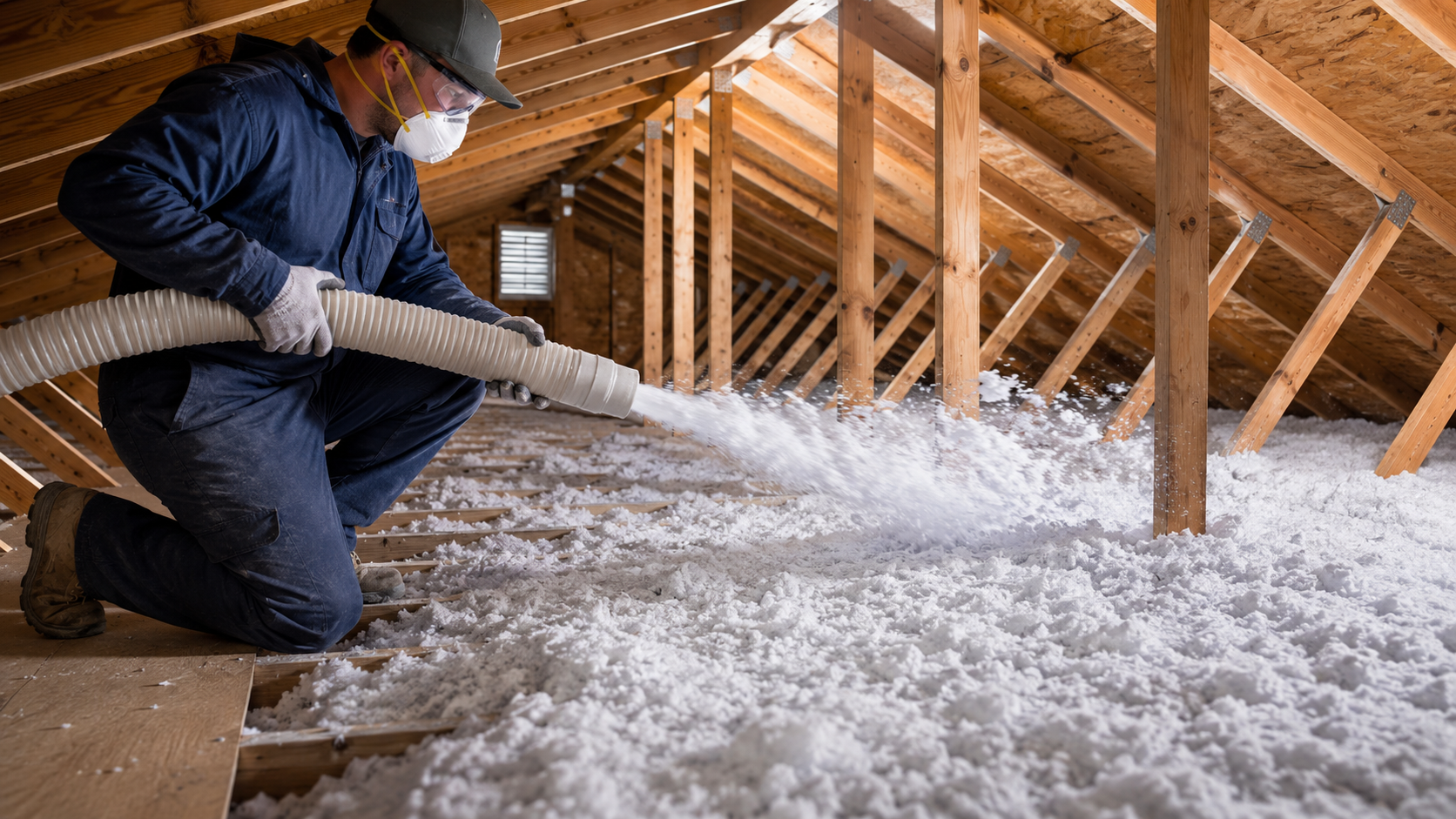
Blown-in insulation is one of the most common attic upgrades. It can often be added over clean, dry existing insulation to increase the total R-value.
Blown-in insulation may be a good fit when:
The attic has some insulation but not enough
Existing insulation is clean and dry
The goal is to increase R-value
The homeowner wants a practical retrofit upgrade
The attic floor has irregular framing or obstructions
Spray Foam Attic Insulation
Spray foam may be considered when air sealing, roofline insulation, or higher-performance attic design is important.
Spray foam may be useful when:
HVAC equipment or ducts are in the attic
The homeowner wants to reduce air movement
The roofline is being insulated
The project involves a high-performance home
The attic has comfort issues that blown-in insulation alone may not solve
Spray foam can be a strong option, but the attic design, ventilation, moisture conditions, and code requirements should be evaluated carefully.
Air Sealing and Attic Insulation
Air sealing can be an important part of attic insulation performance. Insulation slows heat transfer, while air sealing helps reduce unwanted air movement through gaps, cracks, and penetrations.
Common attic air leaks can occur around:
Recessed lights
Plumbing penetrations
Electrical openings
Attic hatches
Duct chases
Top plates
Dropped ceilings
Adding insulation without addressing major air leaks may reduce the effectiveness of the project.
When Insulation Removal May Be Needed
New insulation can sometimes be added over existing insulation, but not always.
Insulation removal may be recommended if the existing insulation is:
Wet
Moldy
Rodent-contaminated
Filled with debris
Heavily compressed
Odor-affected
Damaged by roof leaks
Blocking air sealing work
A proper attic inspection can help determine whether the old insulation should stay or be removed.
Attic Insulation Cost
Attic insulation cost depends on:
Attic size
Current insulation depth
Target R-value
Material selected
Air sealing needs
Insulation removal
Moisture or pest issues
Attic access
Labor and cleanup
Blown-in insulation is often more affordable than spray foam. Spray foam usually costs more but may offer air-sealing and performance benefits in certain applications. The final quote depends on the actual attic and scope of work.
Request an Attic Insulation Quote
A better-insulated attic can help improve comfort, reduce heat transfer, and support better energy performance. Whether you are considering blown-in insulation, spray foam insulation, radiant barrier, air sealing, or insulation removal, the right solution starts with evaluating your attic.