
Blown-In Insulation in Cowtown
Blown-in insulation is the most common ways to improve attic insulation in existing homes and it still common in a lot of new construction because it is effective and cost efficient. If your attic insulation is thin, uneven, compressed, or no longer performing well, adding blown-in insulation may help improve comfort and increase the total R-value of your attic.
For many homes in DFW, blown-in insulation is a practical option because it can often be installed over existing clean, dry insulation without fully rebuilding the attic system. It is commonly used to improve attic coverage, reduce heat transfer, and help make the home more comfortable during North Texas summers and winter cold fronts.
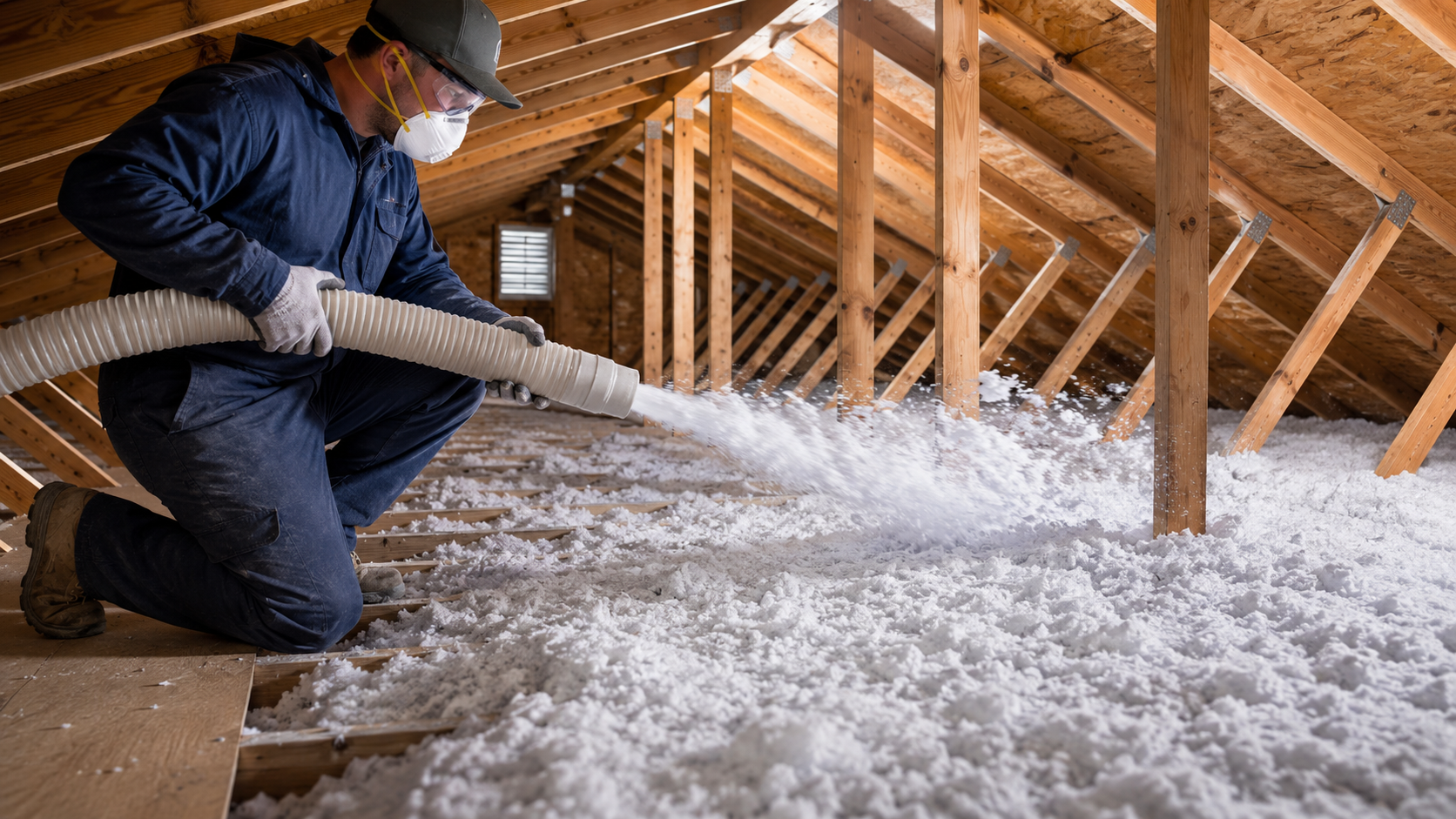
What is blown-in insulation?
Blown-in insulation, also called loose-fill insulation, is insulation material installed with a blowing machine. The material is blown into an attic or enclosed cavity to create a thick, even layer of insulation.
It is commonly used for:
Attic insulation upgrades
Existing homes
Adding insulation over older material
Improving attic R-value
Filling gaps around joists and irregular areas
Retrofit insulation projects
Blown-in insulation is usually made from either fiberglass or cellulose, though other loose-fill materials may be used in some applications.
Blown-In Fiberglass vs. Blown-In Cellulose
The two most common blown-in insulation types are blown-in fiberglass and blown-in cellulose. Both can be used in attic insulation projects, but they have different characteristics.
Blown-In Fiberglass
Blown-in fiberglass is made from fine glass fibers and is commonly used in attic spaces. It is lightweight, noncombustible, and can be installed over existing insulation in many homes.
Typical R-value: about R-2.2 to R-2.7 per inch
Best known for: attic coverage, light weight, moisture resistance compared with cellulose, and common availability
Common uses: attic top-offs, new attic insulation, retrofit projects, and areas where a lightweight loose-fill product is preferred
Main limitation: lower R-value per inch than cellulose, meaning more depth is needed to reach the same target R-value
Blown-In Cellulose
Blown-in cellulose is commonly made from recycled paper fibers treated for fire resistance. It is denser than blown-in fiberglass and can settle into irregular spaces well.
Typical R-value: about R-3.2 to R-3.8 per inch
Best known for: higher R-value per inch than blown-in fiberglass, dense coverage, and good fit around obstructions
Common uses: attic insulation upgrades, enclosed wall cavities, retrofit projects, and spaces where dense coverage is useful
Main limitation: cellulose can be more affected by moisture than fiberglass and may settle over time if not installed properly
ENERGY STAR notes that common insulation materials like fiberglass, cellulose, and mineral wool often have R-values around R-3 to R-3.5 per inch, making depth a useful starting point for estimating attic insulation levels. Actual R-values vary by product and installation.
R-Value and Blown-In Insulation
R-value measures how well insulation resists heat flow. The higher the R-value, the greater the insulating power. The Department of Energy explains that R-value depends on the insulation type, thickness, and density, and that R-values from multiple layers can be added together.
For blown-in insulation, the final R-value depends on:
Material type
Installed depth
Density
Coverage consistency
Settling
Moisture condition
Whether existing insulation remains in place
Installation quality
Example R-Value Estimates
Blown-in fiberglass
6 inches: about R-13 to R-16
10 inches: about R-22 to R-27
14 inches: about R-31 to R-38
18 inches: about R-40 to R-49
Blown-in cellulose
6 inches: about R-19 to R-23
10 inches: about R-32 to R-38
13 inches: about R-42 to R-49
16 inches: about R-51 to R-61
These are general planning ranges only. A contractor should confirm the specific product, installed depth, and target R-value for your attic.
Why Blown-In Insulation Works Well for Attics
Blown-in insulation is popular for attics because it can cover large areas efficiently and settle around joists, framing, ducts, wiring, and other attic obstructions.
Unlike batt insulation, which must be cut and fitted around framing, loose-fill insulation can be blown across the attic floor to create more continuous coverage.
Blown-in insulation may be a good option when:
The attic has too little insulation
Existing insulation is uneven
The insulation is below the top of the ceiling joists
The home has hot or cold rooms
The homeowner wants to improve attic R-value
The existing insulation is dry and clean enough to remain
The project needs a practical retrofit solution
In many existing homes, blown-in insulation is one of the most cost-effective ways to improve attic thermal performance.
Benefits of Blown-In Insulation
Improves Attic R-Value
Adding blown-in insulation can increase the attic’s total R-value, helping slow heat transfer between the attic and the living space.
Good Coverage in Irregular Spaces
Loose-fill insulation can flow around framing, wiring, pipes, and obstructions better than rigid or batt materials.
Practical for Existing Homes
Blown-in insulation is often used in retrofit projects because it can usually be installed without major demolition.
Can Be Added Over Existing Insulation
If the existing attic insulation is clean, dry, and in acceptable condition, new blown-in insulation may sometimes be added over it.
Helps Improve Comfort
A better-insulated attic may help reduce hot upstairs rooms, cold rooms, and uneven indoor temperatures.
Supports Energy Efficiency
Insulation can help reduce heat transfer and support better HVAC performance, especially when paired with air sealing. ENERGY STAR estimates that air sealing and adding insulation can save an average of 15% on heating and cooling costs, or 11% on total energy costs, though actual savings vary by home.
Limitations of Blown-In Insulation
Blown-in insulation can be a strong option, but it is not perfect for every situation.
Blown-in insulation helps slow heat transfer, but it does not seal air leaks the same way spray foam can. For best results, attic air sealing may be needed before insulation is added.
Common air leak areas include:
Recessed lights
Plumbing penetrations
Electrical penetrations
Attic hatches
Duct chases
Top plates
Dropped ceilings
Soffits
Other Limitations of Blown-in Insulation
Some loose-fill materials may settle over time. Proper installation depth and density matter.
Wet or damp insulation may lose effectiveness and can contribute to odor or mold concerns. Roof leaks, condensation, or pest issues should be addressed before adding new insulation.
Blown-in insulation is excellent for many attic floor upgrades, but it may not be the best choice for metal buildings, roofline insulation, or projects where air sealing is the main goal.
If old insulation is wet, contaminated, rodent-damaged, heavily compressed, or filled with debris, removal may be needed before new blown-in insulation is installed.
Blown-in insulation and spray foam insulation both improve thermal performance, but they work differently.
Blown-In Insulation
Blown-in insulation is usually used to increase attic R-value. It is often more affordable than spray foam and is commonly used in existing homes.
Best for:
Attic top-offs
Existing homes
Improving R-value
Budget-conscious upgrades
Clean, dry attic spaces
Large attic floors
Spray Foam Insulation
Spray foam is often used when air sealing, roofline insulation, metal building insulation, or higher-performance building envelope work is needed.
Best for:
Air sealing
Roofline applications
Metal buildings
Shops and garages
Commercial insulation
High-performance projects
Spaces where reducing air movement is a priority
Neither option is automatically better. The best choice depends on the attic, budget, target R-value, ventilation strategy, and comfort goals.
Blown-In Insulation vs. Fiberglass Batts
Fiberglass batts can work well when installed correctly, but they must be cut and fitted around framing and obstructions. Gaps, compression, and poor fit can reduce performance.
Blown-in insulation can often provide better coverage across attic floors because it fills around irregular areas more easily.
Blown-in may be better when:
The attic has irregular framing
There are many wires, pipes, or obstructions
The goal is even coverage
The attic already has insulation and needs more depth
The project is a retrofit
Batts may be better when:
The framing cavities are open and accessible
The installation area is simple and uniform
The project is wall, floor, or framed cavity insulation
The material can be installed without gaps or compression
For many attic upgrade projects, blown-in insulation is the more common retrofit choice.
Blown-In Insulation and Air Sealing
Air sealing is often one of the most important parts of an attic insulation project.
Before adding blown-in insulation, a provider may recommend sealing major attic air leaks. This can help prevent conditioned air from escaping into the attic and help reduce unwanted attic air movement into the living space.
Air sealing may include sealing around:
Plumbing penetrations
Electrical penetrations
Recessed lighting
Duct chases
Attic hatches
Top plates
Knee walls
Dropped soffits
Adding insulation without addressing major air leaks can reduce the effectiveness of the project.
When Old Insulation Should Be Removed
In some cases, blown-in insulation can be added over existing insulation. In other cases, removal is the better approach.
Insulation removal may be recommended if the existing insulation is:
Wet
Moldy
Rodent-contaminated
Filled with debris
Heavily compressed
Affected by smoke or odor
Improperly installed
Blocking needed air sealing work
Damaged by roof leaks
Removing old insulation can also make it easier to inspect the attic, seal air leaks, and install a more consistent insulation layer.
How Much Does Blown-In Insulation Cost?
Blown-in insulation cost depends on attic size, material type, target R-value, existing insulation condition, access, air sealing, and whether old insulation needs to be removed.
Factors that affect cost include:
Square footage
Blown-in fiberglass vs. cellulose
Current insulation depth
Target R-value
Attic access
Air sealing
Old insulation removal
Moisture or pest issues
Labor and cleanup
The Spruce reports blown-in insulation material costs around $0.50 to $2.30 per square foot, not including installation. Installed costs can be higher because labor, equipment, attic access, preparation, and cleanup may be included.
As a practical planning range, a simple attic insulation top-off may cost a few thousand dollars, while larger attic projects involving removal, cleanup, air sealing, and replacement can cost more. The true scope and cost cannot be known without an attic inspection.
Request a Blown-In Insulation Quote
Is Blown-In Insulation Worth It?
Blown-in insulation may be worth considering if your attic is under-insulated, unevenly insulated, or missing insulation in key areas.
It may be especially useful if you notice:
Hot upstairs rooms
High summer cooling bills
Cold rooms during winter
Uneven temperatures
Old or compressed attic insulation
Insulation below the top of the ceiling joists
Dusty attic conditions
A home that struggles to stay comfortable
A well-sealed and properly insulated attic can make a meaningful difference in comfort and energy performance. However, actual savings vary by home and depend on many factors, including air sealing, HVAC efficiency, ductwork, windows, thermostat settings, and installation quality.
Common Blown-In Insulation Questions
Is blown-in insulation good for attics?
Yes. Blown-in insulation is one of the most common choices for attic insulation upgrades because it can cover large areas efficiently and fill around obstructions.
Which is better: blown-in fiberglass or cellulose?
Both can work well. Blown-in fiberglass is lightweight and common in attics. Cellulose generally provides a higher R-value per inch and denser coverage, but it can be more moisture-sensitive. The better option depends on the attic, budget, and project goals.
Can blown-in insulation be added over old insulation?
Sometimes. If the old insulation is clean, dry, and in acceptable condition, new blown-in insulation may be added over it. If it is wet, contaminated, moldy, rodent-damaged, or heavily compressed, removal may be recommended.
Does blown-in insulation stop air leaks?
Not by itself. Blown-in insulation helps slow heat transfer, but air sealing is usually needed to reduce air leaks around penetrations, gaps, and attic bypasses.
How long does blown-in insulation last?
Blown-in insulation can last many years if it stays dry, clean, and undisturbed. Performance can be reduced by moisture, settling, compression, pest activity, or disturbance from attic work.
Does blown-in insulation settle?
Some materials can settle over time, especially cellulose. Proper installation depth and density help account for settling.
Is blown-in insulation safe?
Blown-in insulation is commonly used in homes, but installation should be handled properly. Attic access, dust control, ventilation, protective equipment, and product handling all matter.
How much blown-in insulation do I need?
The amount depends on your current insulation depth, target R-value, insulation type, and attic square footage. A contractor can measure the existing insulation and recommend an appropriate added depth.
Request Blown-In Insulation Quotes in Dallas-Fort Worth
Blown-in insulation can be a practical way to improve attic R-value, increase coverage, and make an existing home more comfortable. The right approach depends on your attic, current insulation, target R-value, air sealing needs, and whether old insulation should be removed.
If you are considering blown-in fiberglass, cellulose insulation, attic insulation, air sealing, or insulation replacement, request a quote to find the best option for your North Texas home.