
Radiant Barrier Installation in Dallas-Fort Worth
Radiant barrier installation is often considered by homeowners who want to reduce attic heat in hot climates like Dallas-Fort Worth. During Texas summers, attic temperatures can become extremely high, especially when the roof absorbs and radiates heat into the attic space.
A radiant barrier is designed to help reduce radiant heat transfer. It is not the same as traditional insulation, but it may work alongside attic insulation as part of a broader attic heat-reduction strategy. Radiant barrier can be a very cost effective addition to existing insulation, especially in climates like North Texas.
DFW Insulation Contractors helps homeowners compare radiant barrier installation options throughout Dallas, Fort Worth, Grapevine, Southlake, Colleyville, Flower Mound, Keller, Mansfield, Plano, Frisco, McKinney, and surrounding North Texas communities.
What Is a Radiant Barrier?
A radiant barrier is a reflective material installed in an attic to reflect radiant heat. It is commonly installed along roof rafters, roof decking, or attic surfaces where it can face an air space.
Traditional insulation is rated by R-value and slows conductive heat flow. Radiant barrier is different. It is designed to reduce radiant heat transfer rather than add traditional R-value.
That means radiant barrier should not be viewed as a direct replacement for attic insulation.
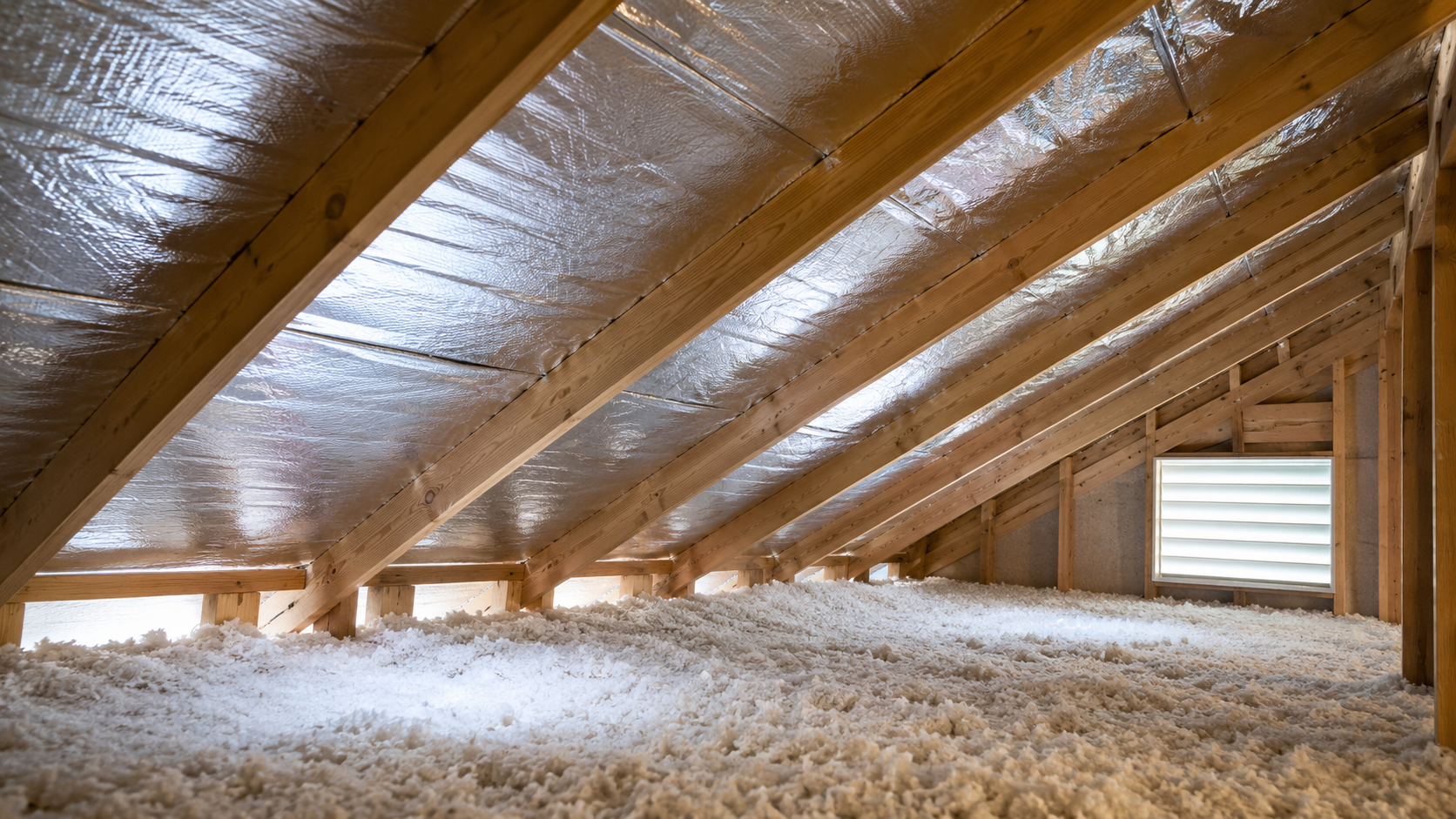
Radiant Barrier vs. Attic Insulation
Radiant barrier and attic insulation solve different problems.
Attic insulation slows heat transfer between the attic and the living space. It is rated by R-value.
Radiant barrier reflects radiant heat and is not usually rated by R-value.
In many homes, the best solution may include both proper attic insulation and radiant barrier. If the attic insulation is thin, damaged, or uneven, simply adding radiant barrier may not fully solve comfort issues.
When Radiant Barrier May Make Sense
Radiant barrier may be worth considering when:
The attic gets extremely hot
The home has strong roof heat gain
Existing insulation is already present
The homeowner wants attic heat reduction
HVAC equipment or ducts are located in the attic
The home is in a hot climate like DFW
The attic has proper ventilation and installation conditions
Limitations of Radiant Barrier
Radiant barrier is not magic, and it is not the right solution for every home.
Limitations include:
It does not replace attic insulation
It does not fix air leaks
It does not solve duct leakage
It requires proper installation and air space
It may underperform if installed incorrectly
It does not repair roof leaks or ventilation problems
It may not be the best first upgrade if attic insulation is very low
A good attic evaluation should consider insulation depth, air sealing, ventilation, ductwork, and radiant heat.
Radiant Barrier Cost Factors
Radiant barrier installation cost depends on:
Attic size
Installation method
Roof pitch
Attic access
Material type
Labor conditions
Existing insulation
Ventilation
Whether other attic upgrades are included
The best way to understand pricing is to request a quote based on the actual attic.
Request a Radiant Barrier Quote
If your attic gets extremely hot or your home struggles with summer comfort, radiant barrier may be worth comparing with attic insulation, air sealing, and other insulation options.