
Old or damaged insulation can affect comfort, air quality, energy performance, and the ability to properly upgrade an attic. In some homes, new insulation can be added over existing material. In other homes, the old insulation should be removed first so the attic can be cleaned, inspected, air sealed, and prepared for a better-performing insulation system.
DFW Insulation Contractors helps homeowners and property owners compare insulation removal and attic insulation replacement options throughout Dallas-Fort Worth, including Dallas, Fort Worth, Grapevine, Southlake, Colleyville, Flower Mound, Keller, Mansfield, Plano, Frisco, McKinney, and surrounding North Texas communities.
Insulation Removal in DFW
When Is Insulation Removal Necessary?
Insulation removal may be recommended when the existing insulation is no longer clean, dry, or effective.
Simply adding new insulation over damaged material can sometimes hide problems instead of solving them.
Insulation removal may be necessary if the attic insulation is:
Wet or water-damaged
Moldy or musty
Contaminated by rodents or pests
Filled with droppings, nesting material, or debris
Heavily compressed or uneven
Affected by smoke, odor, or dust
Damaged by roof leaks or plumbing leaks
Blocking areas that need air sealing
Very old or no longer performing well
In many cases, removing old insulation gives the contractor a better view of the attic floor, ceiling penetrations, wiring, ductwork, and problem areas that may need attention before new insulation is installed.
Why Remove Old Attic Insulation?
The main reason to remove insulation is to create a cleaner, safer, and better-prepared attic before adding new insulation.
Old insulation can lose performance over time if it becomes compressed, disturbed, damp, or contaminated. In homes with pest activity, insulation can also hold odors, droppings, nesting debris, and dust. If moisture has been present, the insulation may no longer perform properly and may need to be removed before the underlying issue is addressed.
Removal can also make it easier to complete important prep work, including:
Inspecting for roof leaks or moisture problems
Identifying pest damage
Sealing attic air leaks
Cleaning debris from the attic floor
Preparing the attic for blown-in insulation, spray foam, or another insulation system
Improving the consistency of the final insulation installation
A properly prepared attic can help the new insulation perform closer to its intended R-value.
The Insulation Removal Process
The exact process depends on the attic, insulation type, contamination level, and access, but most insulation removal projects follow a general sequence.
1. Attic Inspection
The contractor evaluates the existing insulation, attic access, moisture conditions, pest signs, ductwork, ventilation, and areas that may need repair or air sealing.
2. Protection and Setup
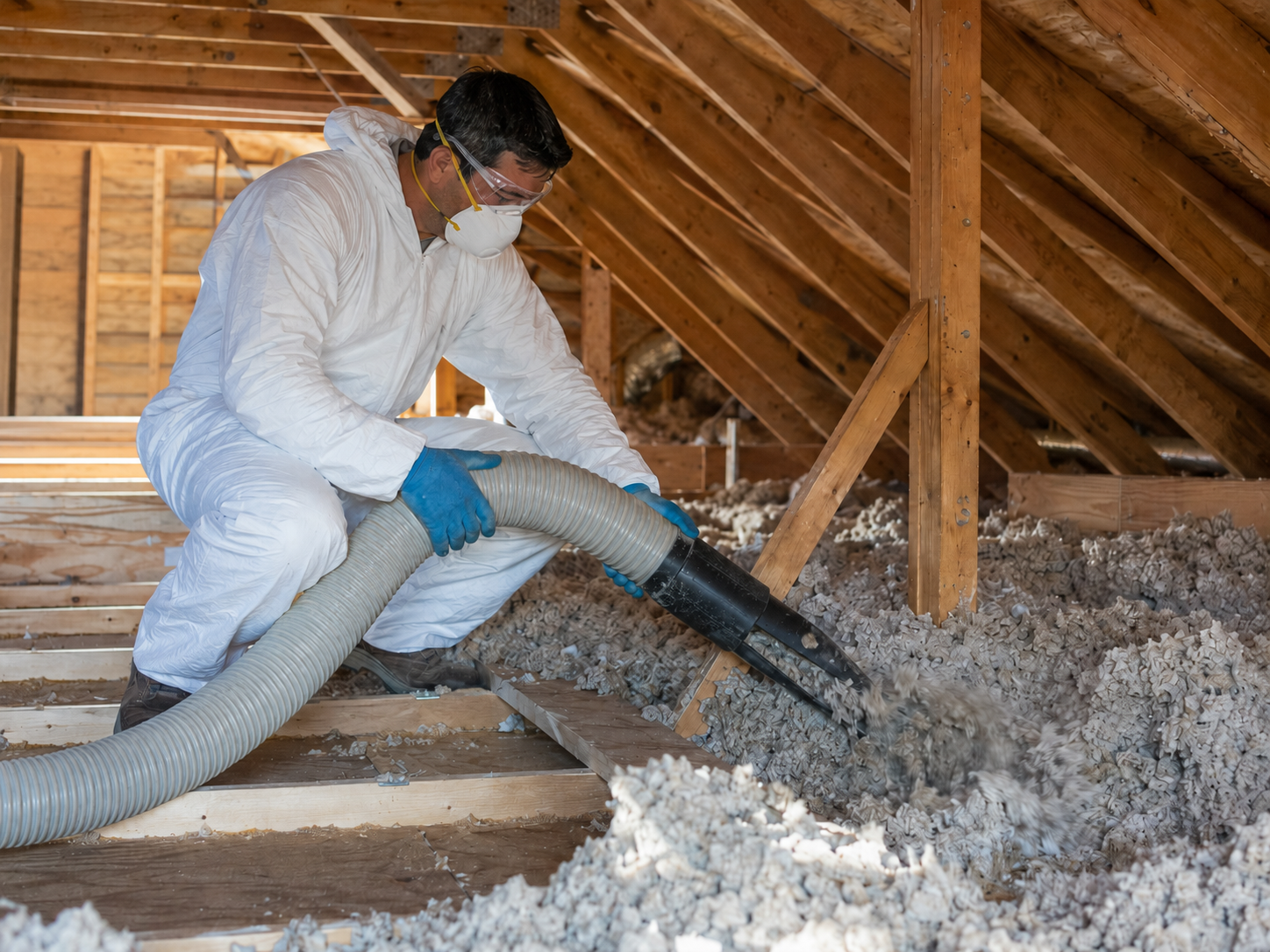
The work area is protected, and removal equipment is set up. In many projects, a vacuum hose is run into the attic while the collection equipment remains outside the home.
3. Insulation Removal
Old insulation is removed from the attic floor using vacuum equipment, bags, or hand removal methods depending on the material and condition. Workers typically use protective gear when dust, debris, or contamination may be present.
4. Cleanup and Prep
Once the insulation is removed, the attic can be cleaned and inspected more clearly. This is often the best time to address air leaks, pest entry points, minor debris, or other attic issues before installing new insulation.
5. New Insulation Recommendation
After removal and prep, the contractor can recommend the right replacement system, such as blown-in fiberglass, blown-in cellulose, spray foam insulation, radiant barrier, or a combination of attic upgrades.
Insulation Removal and Replacement
Insulation removal is not the final step. In most cases, the goal is to remove old material so a better insulation system can be installed.
Replacement options may include:
Air sealing plus blown-in insulation
Insulation replacement after pest or moisture remediation
The right system depends on the condition of the attic, the target R-value, the home’s comfort issues, and the homeowner’s budget.
Request an Insulation Removal Quote
If your attic insulation is old, wet, compressed, rodent-damaged, moldy, or no longer performing well, it may be time to compare insulation removal and replacement options.
DFW Insulation Contractors helps property owners request insulation removal quotes throughout Dallas-Fort Worth and surrounding North Texas communities.