
Spray Foam vs. Fiberglass Insulation
Spray foam and fiberglass are two of the most common insulation options for homes, attics, shops, garages, and commercial buildings. Both can improve comfort and reduce heat transfer, but they work differently and are not always used for the same type of project.
For property owners in Dallas-Fort Worth, the right choice depends on the building, budget, target R-value, air sealing needs, moisture conditions, and where the insulation will be installed.
DFW Insulation Contractors helps homeowners and property owners compare insulation options throughout Dallas, Fort Worth, Grapevine, Southlake, Colleyville, Flower Mound, Keller, Mansfield, Plano, Frisco, McKinney, and surrounding North Texas communities.
Fiberglass insulation is usually the more affordable option and is commonly used in attics, walls, floors, and retrofit projects. It can work well when properly installed, but gaps, compression, and air leaks can reduce performance.
Spray foam insulation usually costs more, but it can help insulate and air seal at the same time. It is often used in attic rooflines, metal buildings, shops, garages, commercial spaces, and higher-performance projects.
Neither option is automatically better. The best choice depends on your project.
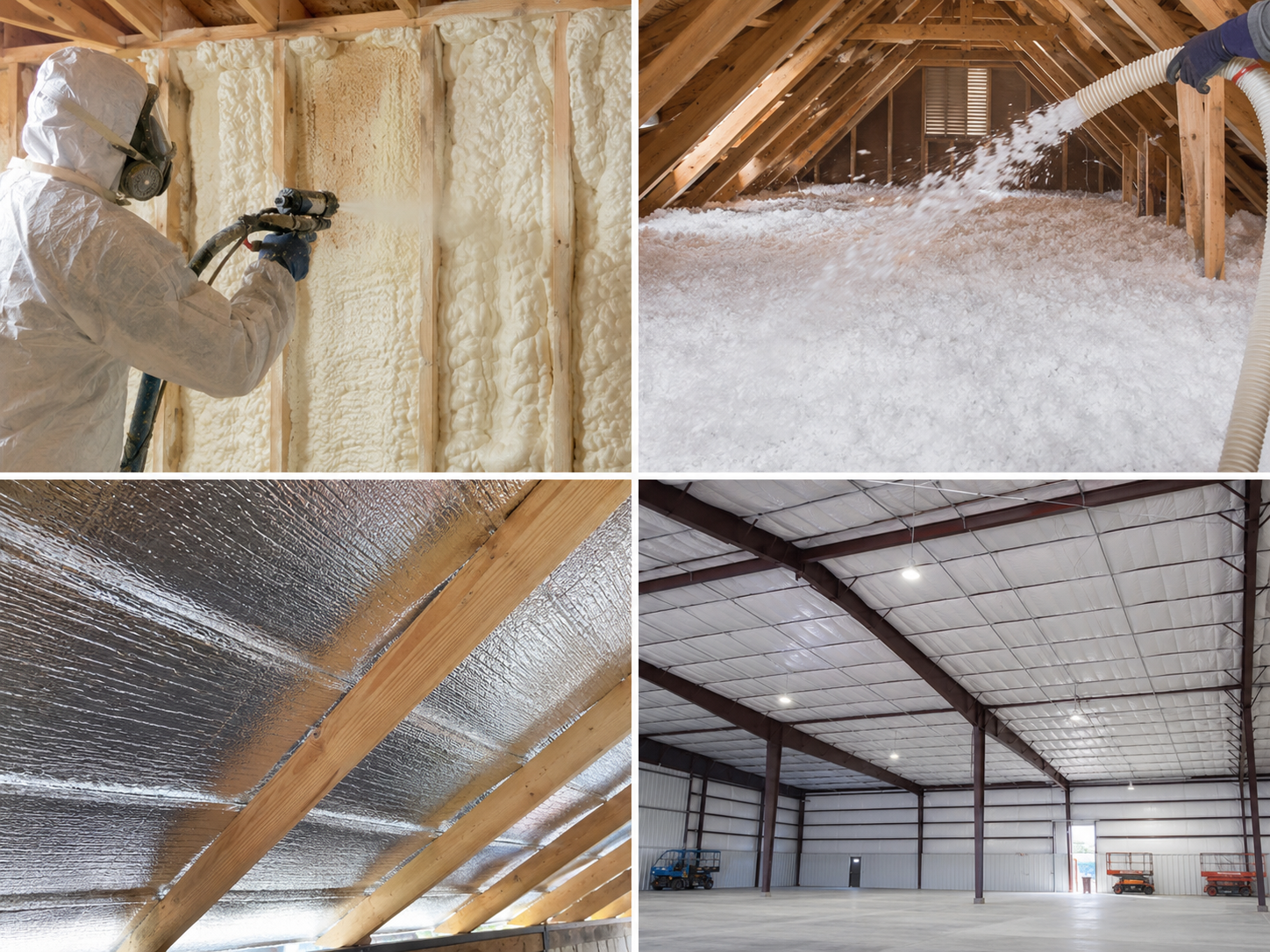
R-Value Comparison
R-value measures resistance to heat flow. The higher the R-value, the better the insulation resists heat transfer.
Fiberglass batts: typically about R-2.9 to R-3.8 per inch
Blown-in fiberglass: typically about R-2.2 to R-2.7 per inch
Open-cell spray foam: typically about R-3.5 to R-3.9 per inch
Closed-cell spray foam: typically about R-6.0 to R-7.0 per inch
Closed-cell spray foam generally has the highest R-value per inch, while fiberglass is often more affordable and widely used for attic insulation upgrades.
Air Sealing Difference
One of the biggest differences between spray foam and fiberglass is air sealing.
Fiberglass helps slow heat transfer, but it does not seal air leaks by itself. Air can still move through gaps, cracks, and penetrations unless those areas are sealed separately.
Spray foam expands after application and can help reduce air movement when properly installed. This makes spray foam attractive for projects where air sealing is a major priority.
Cost Comparison
Fiberglass is usually less expensive than spray foam. That makes it a practical choice for many attic insulation upgrades, especially when the existing attic simply needs more insulation depth.
Spray foam usually costs more upfront, but it may provide additional benefits such as air sealing, higher R-value per inch with closed-cell foam, and better performance in certain applications.
A simple attic top-off may be better suited for fiberglass or blown-in insulation. A roofline insulation project, metal building, or high-performance build may be better suited for spray foam.
Best Uses for Fiberglass
Fiberglass may be a good fit for:
Attic insulation upgrades
Blown-in attic insulation
Wall cavities
Floors over garages or unconditioned spaces
Budget-conscious projects
Homes with clean, dry existing insulation
Projects where air sealing can be handled separately
Best Uses for Spray Foam
Spray foam may be a good fit for:
Attic rooflines
Metal buildings
Shops and garages
Barndominiums
Commercial insulation projects
High-performance insulation projects
Air sealing applications
Limited-depth cavities where closed-cell foam is needed
Which Is Better for Dallas-Fort Worth Homes?
For many DFW homes, the best insulation option depends on the attic and the homeowner’s goals.
If the attic has clean existing insulation but not enough depth, blown-in fiberglass or cellulose may be a practical and cost-effective upgrade.
If the attic has major air leakage, HVAC equipment in the attic, comfort problems, or a roofline insulation goal, spray foam may be worth considering.
The right answer depends on the home, not just the material.
Request an Insulation Quote
If you are comparing spray foam vs. fiberglass insulation, the best next step is to evaluate the space, current insulation, target R-value, air sealing needs, and budget.